
What To Expect With Your Credit Cards When Filing Chapter 7 Bankruptcy
If you file for Chapter 7 bankruptcy and hope to keep one of your credit cards at your side, you’ll probably be out of luck. Credit card companies usually cancel credit cards that are tied to any bankruptcy filing. But why does that happen? Is there a way to get a credit card even with a Chapter 7 Bankruptcy? That’s what our Honolulu chapter 7 bankruptcy lawyers are ready to answer in the following article.
Stay with us to learn all the details about credit cards and Chapter 7 bankruptcy, including why you can’t keep personal credit cards when filing for bankruptcy and what steps are necessary to get a credit card after bankruptcy.
Can I Keep a Credit Card After Filing Chapter 7 Bankruptcy?

In most cases, you cannot keep credit cards after filing Chapter 7 Bankruptcy. That’s because you must list all credit card accounts when filing for bankruptcy.
That’s why bankruptcy filings have a strong impact on anyone’s credit. It’s a detrimental step for collectors because it lets them know they’ll never collect all the money you owe them.
Having a bankruptcy on your financial history makes it quite difficult for lenders to give you a new loan. And you should continue to pay higher interest rates and penalties when you are willing to open a new credit card account than someone who does not have a bankruptcy in their financial history.
Both of your loans are removed in a Chapter 7 bankruptcy, but the record of your filing lasts for up to ten years on your credit report. However, it’s worth mentioning that your loans can be restructured with a Honolulu Chapter 13 bankruptcy lawyer by filing for Chapter 13 bankruptcy, as it allows you to pay down a part of them within three to five years.
Is It Possible To Exclude Credit Card Debt From a Chapter 7 Bankruptcy Filing?
In essence, you cannot selectively exclude credit card debt with Chapter 7 bankruptcy, even if your account has a zero balance or hasn’t been used recently. That’s because bankruptcy law requires listing all debts and creditors—no exception to this rule.
As soon as you file for bankruptcy, two things happen:
- All credit card agreements are terminated
- Leaving out a creditor is not allowed since bankruptcy law forbids choosing which debts to disclose
- Reaffirmation is not usually a good solution because most credit card companies never agree to this method.
Are All Credit Card Accounts Automatically Closed In Chapter 7 Bankruptcy?
As we mentioned before, basically all credit card accounts are closed when filing for Bankruptcy. The only exception happens with employer-issued or corporate cards, where the employer (not the person) is legally responsible for the charges.
Simply put, Chapter 7 treats credit card debts as standard unsecured debts. That’s why you must include them in your case.
Once discharged, you start with a clean slate, and any credit you use after bankruptcy will come from a new, pre-existing account.
How Bankruptcy Terminates Credit Card Agreements
Filing for bankruptcy starts an automatic stay, which is a court order that stops creditors from collecting debts and charging fees. During this part of the process, credit card companies can no longer ask for payments or apply penalties under the original agreement.
Afterward, the debt on your credit card will appear as an unsecured debt. Under Chapter 7 Bankruptcy, these types of debts are usually discharged, meaning that you don’t have the obligation to repay the debt.
In Chapter 13 bankruptcy, the same discharge occurs, but repayment may still happen through a court-approved repayment plan. However, the original terms like late fees and interest rates no longer apply.
Credit Card Mistakes To Avoid After Filing Chapter 7
If you want to ensure a safe Chapter 7 bankruptcy and avoid potential legal complications, then you should avoid these risks with your credit cards before filing for bankruptcy. These actions could easily lead to allegations of bankruptcy fraud or other problems. Here’s what you should avoid:
- Expending over $900 on luxury items within 90 days of bankruptcy. This could be seen as fraudulent, and it could be a strong burden to you to prove you really intended to make that purchase and you can repay the charge.
- Asking for cash advances, especially with high amounts. If the advance is over $1,250 and taken within 70 days, it’ll be a strong challenge for your finances, and it could also be seen as fraudulent.
Basic expenses like gas, food, and utility bills are less likely to be considered fraud, but we still recommend having detailed receipts in case a trustee or creditor questions the charges.
Why Creditors Approve Credit Cards After a Chapter 7 Discharge
There are a few reasons why creditors are ready to approve new credit cards after a Chapter 7 discharge, so it should not be surprising.
The first thing that allows credit card approval is the risk profile change. Once a Chapter 7 discharge is granted, most unsecured debts are wiped out, allowing the borrower to get a fresh start with their credit score. That means fewer competing obligations and more available income.
Not to mention that bankruptcy limits future discharge risk because the law prevents filing another Chapter 7 bankruptcy for at least 8 years. This is a good opportunity for creditors because they know the new debt cannot be easily eliminated through bankruptcy again.
How To Get Approved For a New Credit Card After Filing Chapter 7 Bankruptcy
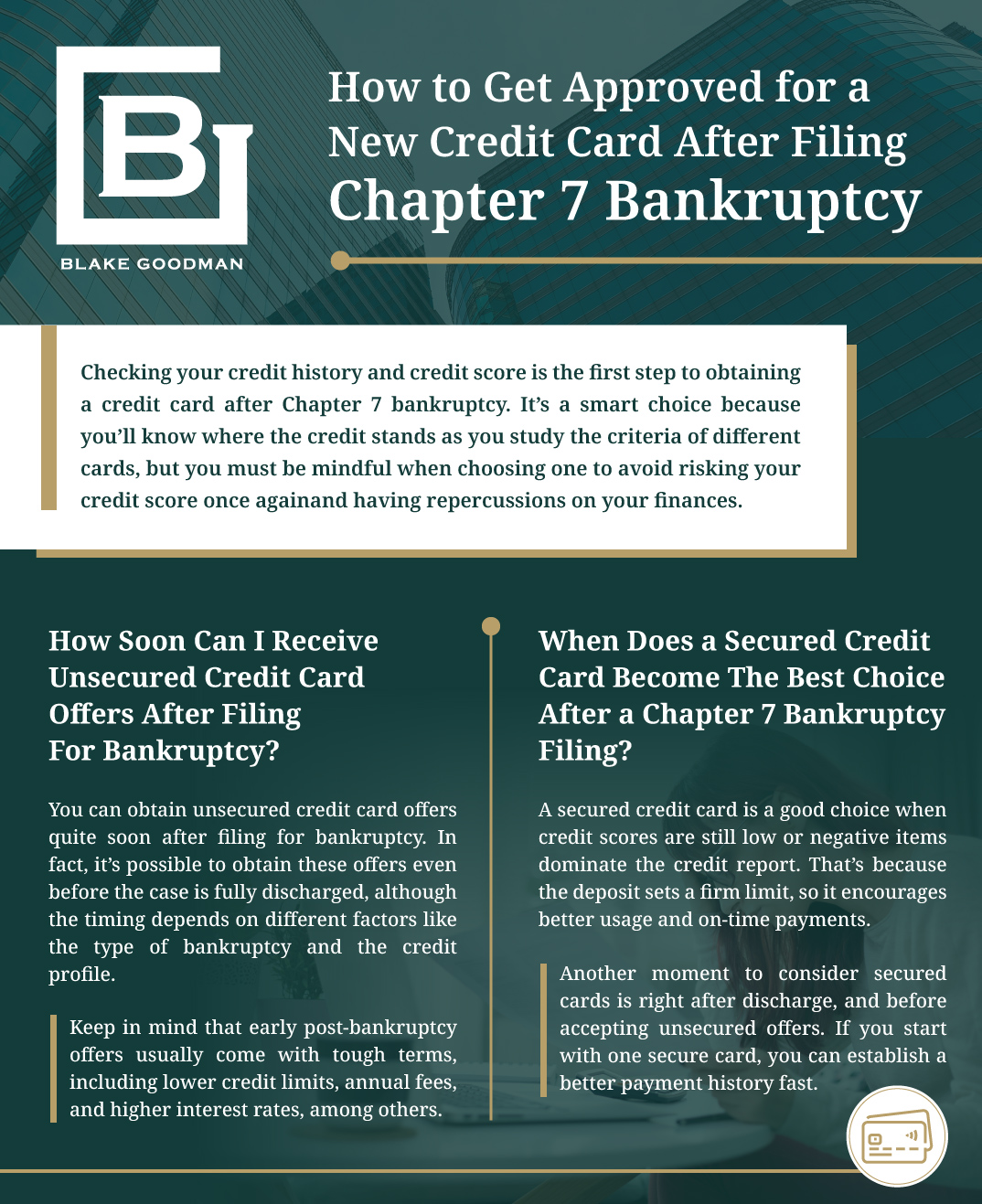
Checking your credit history and credit score is the first step to obtaining a credit card after Chapter 7 bankruptcy. It’s a smart choice because you’ll know where the credit stands as you study the criteria of different cards.
Maybe you won’t like what you’ll see, but don’t give up hope. You may find that your credit score increases dramatically after a year of having your bankruptcy dismissed by paying your bills on time and holding no debt, especially with the right credit score assistance.
As you can see, it is totally possible to obtain a credit card after filing for Chapter 7 bankruptcy, but you must be mindful when choosing one to avoid risking your credit score once again and having repercussions on your finances.
How Soon Can I Receive Unsecured Credit Card Offers After Filing For Bankruptcy?
You can obtain unsecured credit card offers quite soon after filing for bankruptcy. In fact, it’s possible to obtain these offers even before the case is fully discharged, although the timing depends on different factors like the type of bankruptcy and the credit profile.
Keep in mind that early post-bankruptcy offers usually come with tough terms, including lower credit limits, annual fees, and higher interest rates, among others.
When Does a Secured Credit Card Become The Best Choice After a Chapter 7 Bankruptcy Filing?
A secured credit card is a good choice when credit scores are still low or negative items dominate the credit report. That’s because the deposit sets a firm limit, so it encourages better usage and on-time payments.
Another moment to consider secured cards is right after discharge, and before accepting unsecured offers. If you start with one secure card, you can establish a better payment history fast.
Top Strategies To Rebuild Credit After a Chapter 7 Bankruptcy Discharge
You probably already know what to change about your credit habits after bankruptcy, and luckily, you’ll stay far away from high debts again. But let’s give you a few tips on how to rebuild your credit wisely so you can start fresh again without any stress:
- Start a new credit line: If possible, request a secured credit card and use it for small, manageable purchases to rebuild your credit score gradually and with proper control.
- Keep your credit use low: Avoid using too much of your available credit, as it can hurt your score—and you surely don’t want to repeat the same mistakes as before. The best trick is to stay under 30% of your credit limit (or lower).
- Make timely payments: This is probably the most obvious, but you really need to be mindful of payments. Payment history is the most important factor in a credit score, after all. Paying the balance in full every month helps you avoid high interest rates in the future and shows lenders reliable financial habits.
- Have a good credit mix: This strategy means you can use your credit responsibly, not only regarding credit cards, but also car loans and others. By using all your credit properly, you’re showing lenders that you’re an overall responsible user of credit.
- Build a consistent and efficient financial routine: Create a routine that works for your finances. It should include budgeting, paying bills early, and avoiding unnecessary debt.
Consult Our Trusted Honolulu Bankruptcy Lawyers For More Information

As you can see, you should feel relieved that after filing for bankruptcy in Hawaii, you won’t have a closed credit industry forever. You’ll still have a chance to regain your credit score, but you must be wise about your financial choices.
If you’re thinking about filing for bankruptcy in Hawaii and don’t know where to start, what to do, or just know if that’s actually the best choice, contact us now at Blake Goodman, P.C and speak with an experienced Honolulu bankruptcy lawyer. We’ll be glad to help!

Email: blake@debtfreehawaii.com
Website: https://www.debtfreehawaii.com/
HONOLULU OFFICE
900 Fort Street MallSuite 910
Honolulu, HI 96813
Phone: (808) 517-5446
AIEA OFFICE
98-1238 Ka'ahumanu StSuite 201
Pearl City, HI 96782
Phone: (808) 515-3441
KANEOHE OFFICE
46-005 Kawa StSuite 206
Kaneohe, HI 96744
Phone: (808) 515-3304
MAUI OFFICE
220 Imi Kala St. #203BWailuku, HI 96793
Phone: (808) 515-2037

Blake Goodman received his law degree from George Washington University in Washington, D.C. in 1989 and has been exclusively practicing bankruptcy-related law in Texas, New Mexico, and Hawaii ever since. In the past, Attorney Goodman also worked as a Certified Public Accountant, receiving his license form the State of Maryland in 1988.